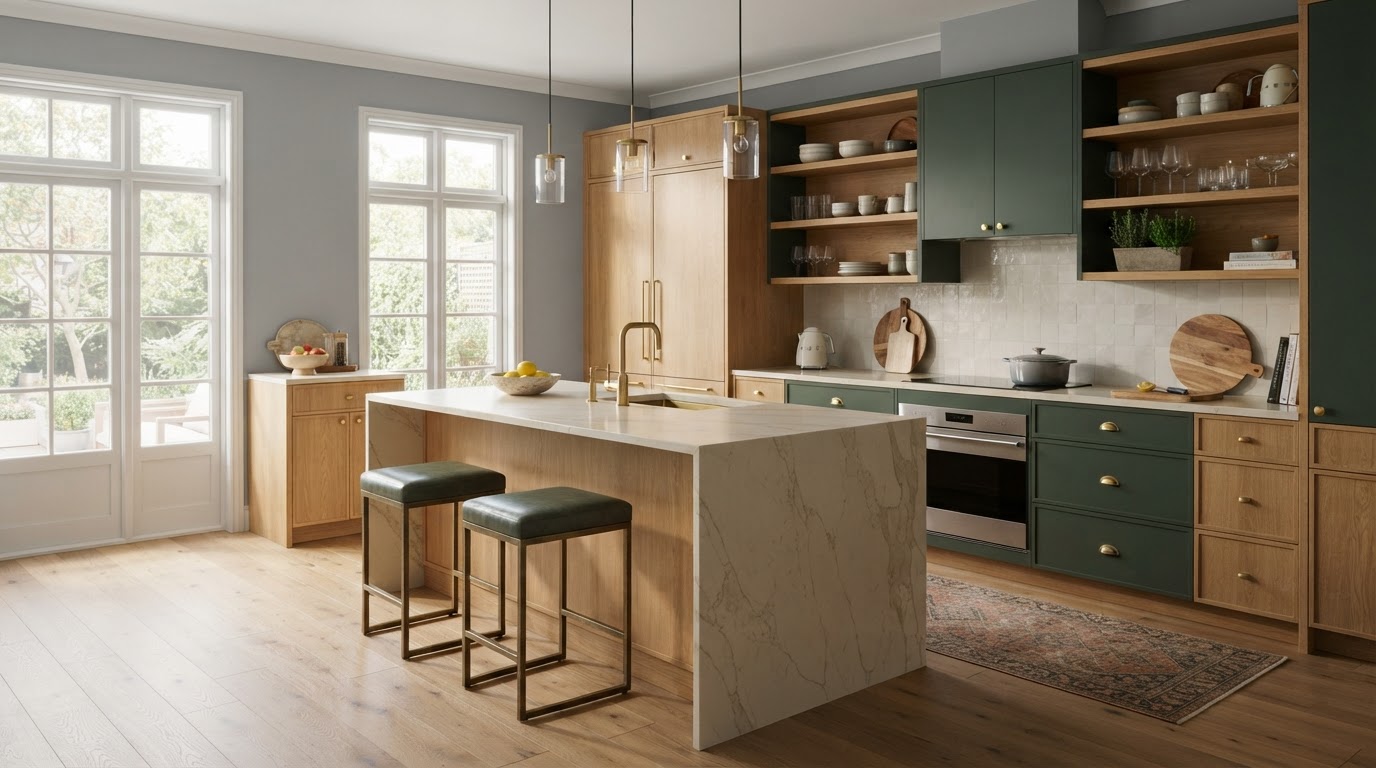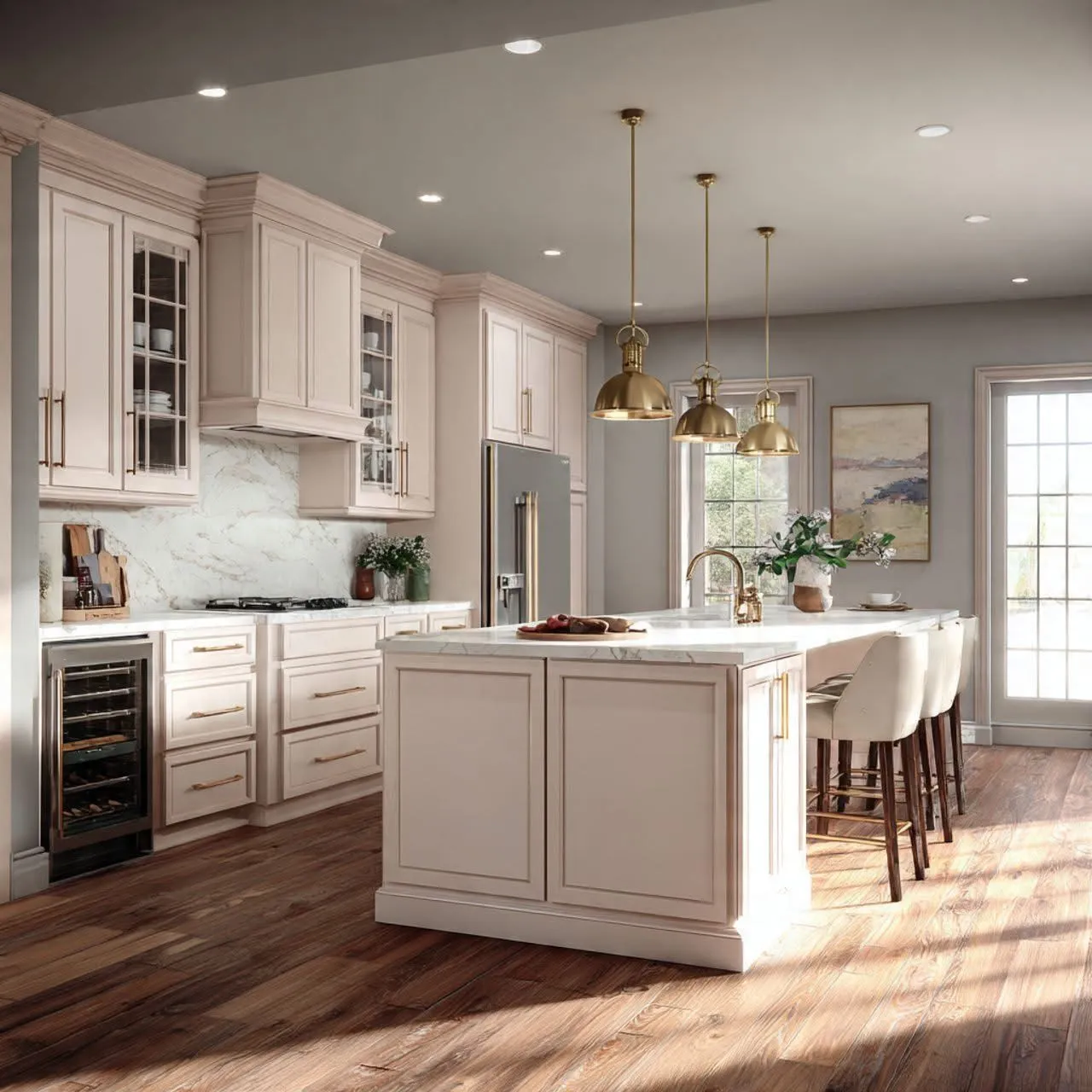
Pick a wood species before you pick a finish, because the grain underneath is what gives the cabinet its character and its wear pattern. Two kitchens painted the same dove gray can look and age completely differently depending on whether there's oak or maple under the paint.
Here's a practical guide to the species we work with most, what each one is good at, and where it tends to show up in New Jersey homes.
Oak — the reliable workhorse
Oak has an open, pronounced grain that reads as 'wood' from across the room, which is exactly why it's been the default for decades. Red oak is warmer; white oak reads a touch cleaner and takes a wider range of stains. Oak is tough, holds hardware well, and shrugs off the kind of daily abuse a family kitchen dishes out.
The trade-off is the grain itself: if you want a glass-smooth painted door, oak's open pores will telegraph through the finish unless they're filled. For a stained or natural look, that same grain is the selling point.
Maple — smooth and paintable
Maple is dense, tight-grained, and pale, which makes it the go-to for painted and light finishes where you want a clean, even surface. It's harder than oak on the Janka scale, so it resists denting, and the closed grain means a painted maple door stays crisp. It's also the species to pick if you want a natural, almost invisible grain.
The catch: maple can amber over time in direct sun, and it's pricier than oak. For a painted shaker door in a dove or beige tone — which is a lot of what we build — maple is usually the right call.
Cherry — warmth that deepens
Cherry is the species people reach for when they want warmth without stain. It starts light pink-brown and deepens over the first year or two as it's exposed to light, settling into a rich, reddish brown. The grain is fine and closed, and it takes a clear finish beautifully.
Cherry is softer than maple and oak, so it dings more easily, and that color shift is a feature for some owners and a surprise for others. We talk clients through it because the 'furniture is changing color' call is a common one in month three.
Hickory and the character woods
Hickory is the strongest of the common species and the most visually aggressive — dramatic light-and-dark grain that reads rustic. It's a statement, not a backdrop, and it pairs well with the olive and forest greens we use. Beyond hickory, alder and walnut round out the shop: alder for a softer, knotty look at a lower price, walnut for a premium, chocolate-toned grain that sells itself.
Matching species to finish
As a rule of thumb: paint maple, stain oak or cherry, go natural on walnut, and use hickory when you want the grain to be the design. We'll walk through samples at the consult so you can see the same finish on two or three species side by side — that's usually where the decision gets made.
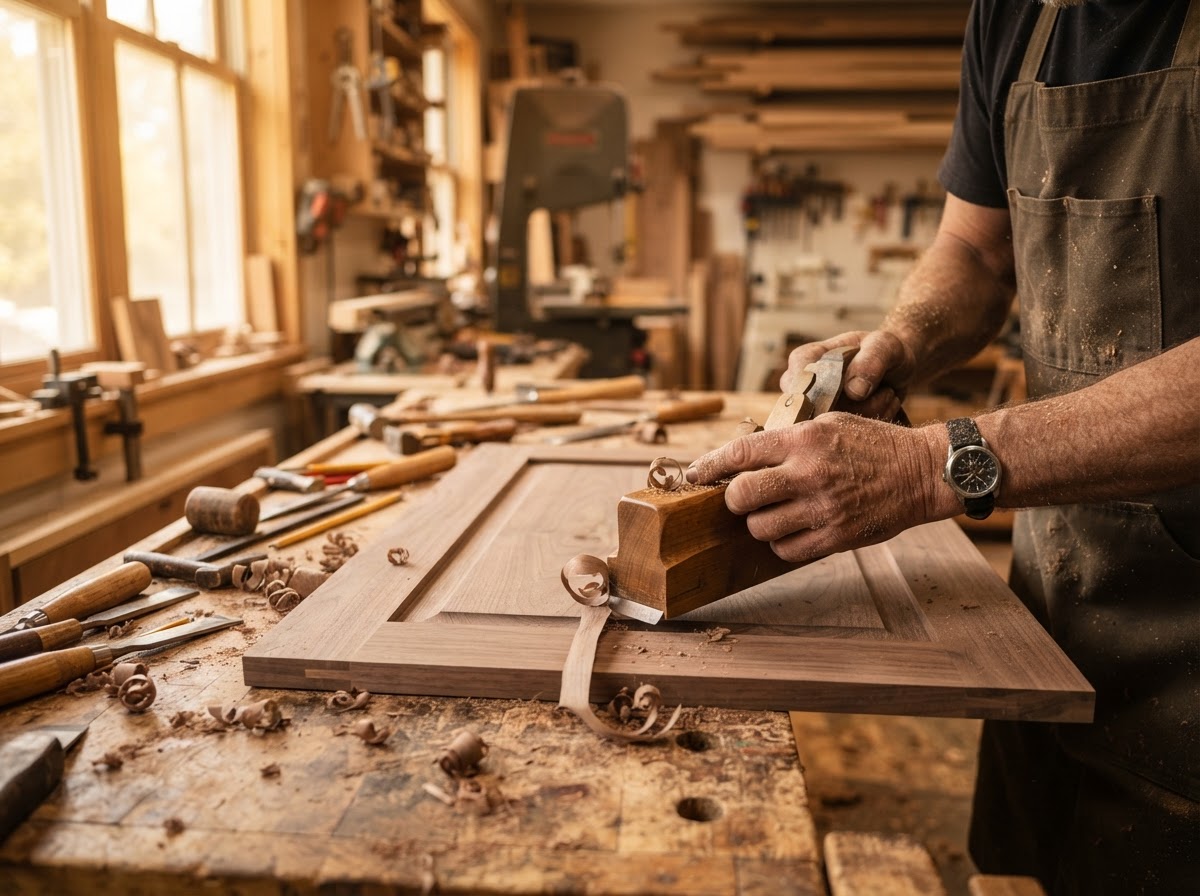
Whatever you choose, it's all-wood construction underneath, with the same dovetail drawers and the same 5-year warranty. The species is about how it looks and wears; the build is about how long it lasts.