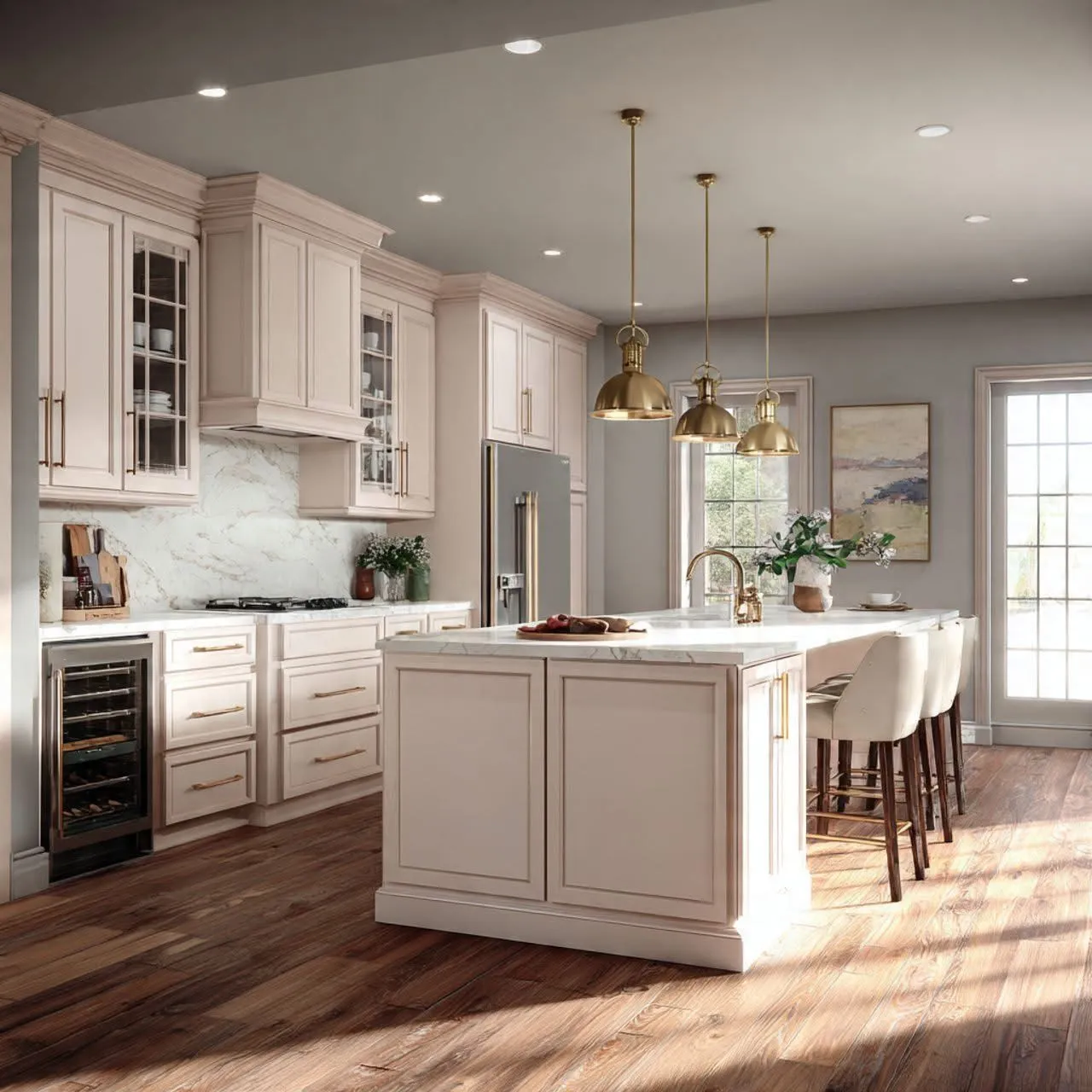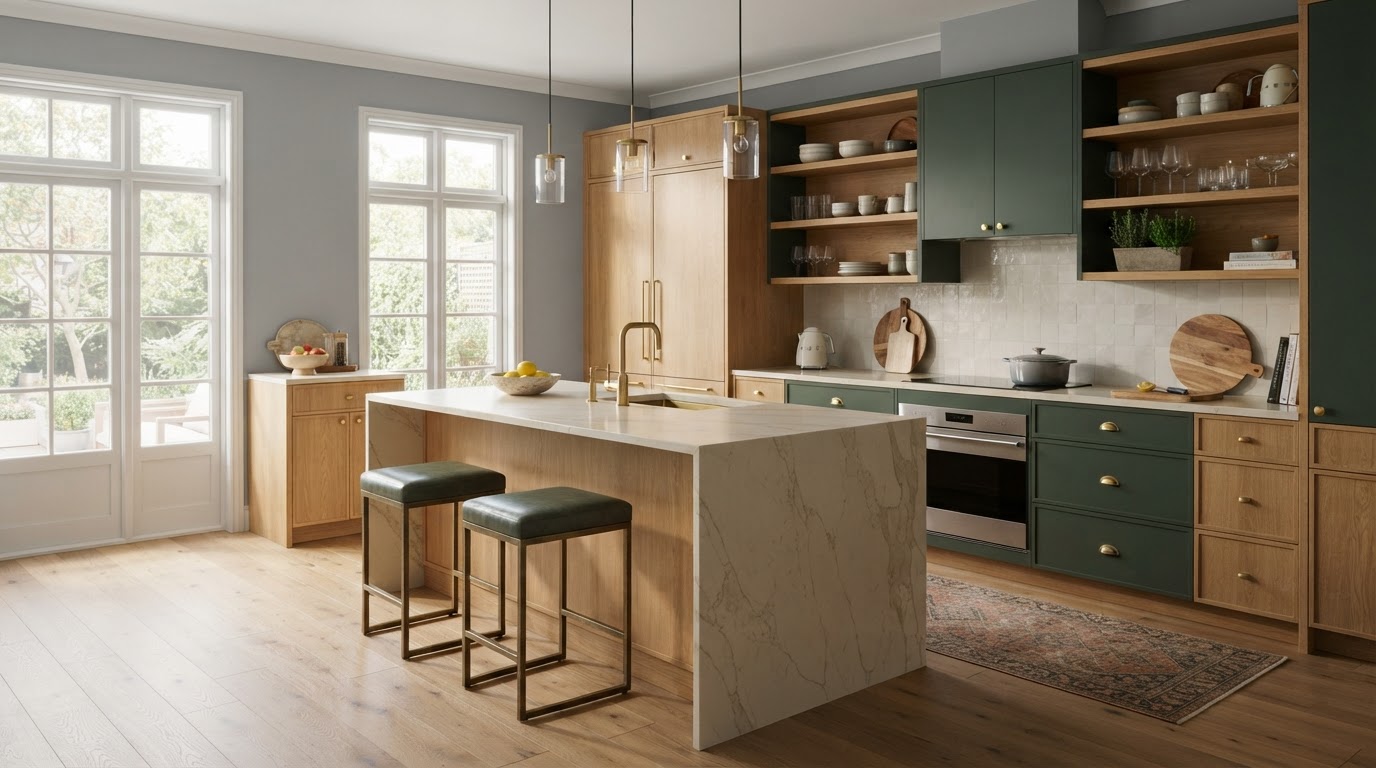
Most cabinet shopping happens at eye level — you see the door, the finish, the hardware, and you make a call. But the part of the cabinet that decides how long it lasts is the part you can't see: the box, the face frame, and the drawer construction. That's where 'all wood' and 'engineered wood' part ways, and where a lot of cabinets quietly cut corners.
We build all-wood cabinets for one reason: they hold up. This is the quick version of what's actually in the box, why it matters, and how to check before you sign off on a quote.
What 'all wood' actually means
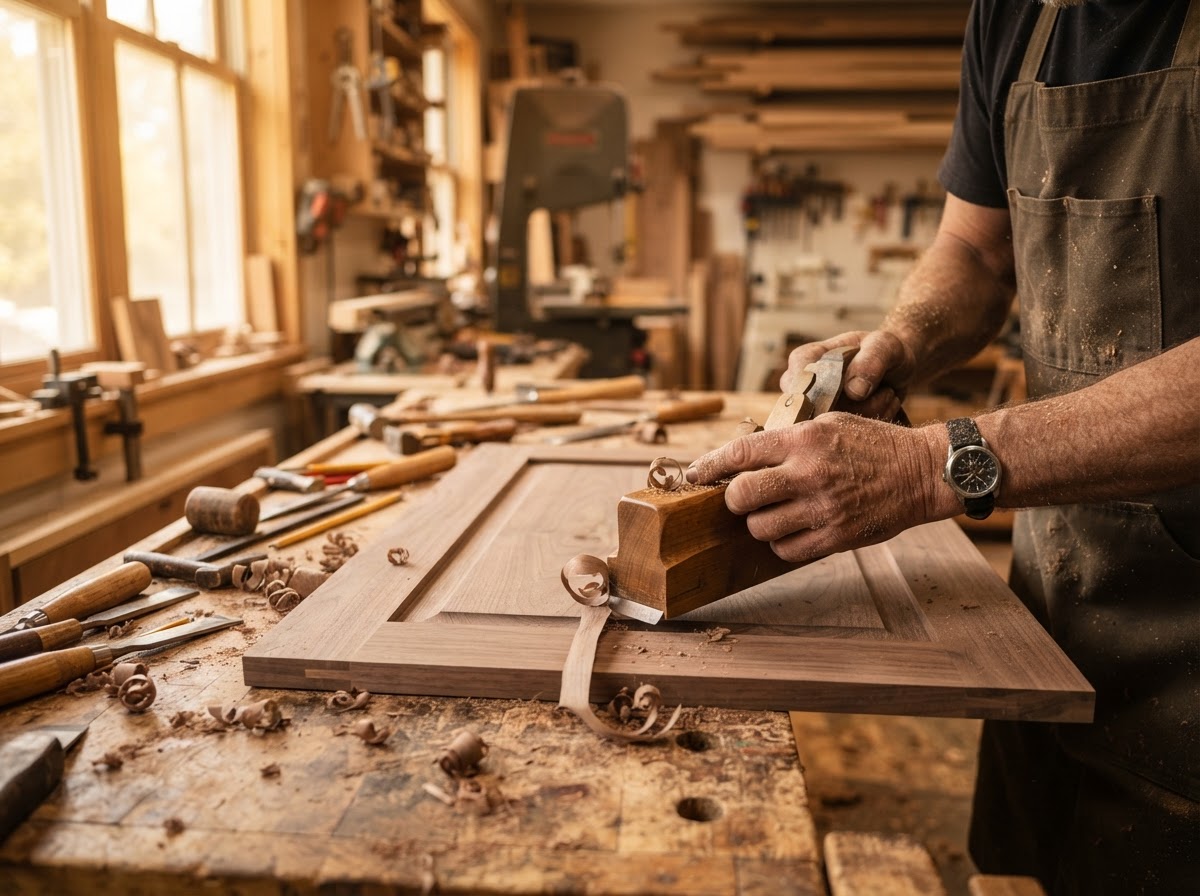
All-wood construction is exactly what it sounds like: the structural parts of the cabinet — the face frames, the door panels, and the drawer boxes — are milled from solid lumber, and the cabinet boxes use plywood rather than pressed board. Plywood is still layered and glued, but it's real wood veneers laid cross-grain, which gives it strength that pressed sheets of sawdust and resin can't match.
When a cabinet is sold as 'engineered' or 'furniture board,' that usually means the box and shelves are particleboard or MDF — wood fibers compressed with adhesive under heat. It's cheaper, it's flat, and it takes a veneer or paint well. The trade-off is moisture and fastener holding power. A screw backed out and re-driven into particleboard rarely bites the second time.
The particleboard problem
Particleboard fails in two predictable ways in a kitchen or bath: moisture and movement. Kitchens run humid from cooking and dishwashing; baths run humid from showers. Particleboard swells at the seams and fastener points, and once it swells, it doesn't come back. A loose hinge on an all-wood face frame gets a new screw and is fine. A loose hinge on a swollen particleboard rail is a permanent problem.
It's not that particleboard has no place — it's a reasonable substrate for a paint-grade, low-moisture, low-traffic application where cost is the driver. It's that in a kitchen, where doors get slammed, drawers get loaded, and humidity swings every day, the structural material is doing real work. That's where solid wood earns its keep.
- Solid wood holds fasteners — hinges and slides can be re-tightened or replaced without losing grip.
- Plywood boxes resist the humidity swings that swell particleboard at the seams.
- Dovetail joinery in a solid-wood drawer is a mechanical lock, not a glue-and-pray joint.
How to check before you buy
You don't need to be a woodworker to vet a cabinet. Ask the shop what the box is made of and what the drawer box is made of. 'All-wood' should mean solid wood face frames and door panels with plywood boxes — if the answer is vague or leans on 'high-density,' push on it. Look at a drawer: pull it out and look at the corner joint. Dovetails mean solid wood drawer boxes; staples and glue mean something cheaper.
Ask about the warranty and read what it actually covers. A 5-year limited warranty on materials and workmanship is only as good as the material it's written against — a warranty on a particleboard box is a shorter promise than it sounds like.
What we build (and why)
Every cabinet we build is all-wood: solid wood face frames, plywood boxes, dovetailed drawers, soft-close hinges and full-extension slides standard. We don't offer a particleboard option, because the savings aren't worth the callback. And every build carries a 5-year limited warranty — the kind of promise you can only make when you know what's in the box.
If you're comparing quotes, ask both shops what's inside. The price difference usually traces back to that answer faster than anything else.